El Noguer

Joaquim Perez i Noguer

KDE Plasma 5 al Kubuntu 14.04

Filed under: Linux — Joaquim Perez Noguer at 12:25 pm on Divendres, agost 22, 2014

KDE es renova. KDE5 millora el menú d’inici, el menú de sortir i iniciar la sessió i sobre tot millora l’organització de les opcions per configurar el sistema, que abans estaven desordenades en el KDE4.

[youtube]http://youtu.be/Y1NAZGsQtjQ[/youtube]

Trusty Tahr KDE Plasma 5 on Kubuntu 14.04

Pàgines web impressionants amb Parallax scrolling

Filed under: Ciència i tecnologia — Joaquim Perez Noguer at 10:17 am on Divendres, agost 22, 2014

Una gran tendència de disseny web del moment és parallax scrolling, que implica el fons es mou a un ritme lent en el primer pla però molt fluid, creant un efecte 3D a desplaçar-se per la pàgina. A vegades pot ser aclaparador, però quan s’usa amb moderació pot proporcionar un element agradable, subtil de profunditat.

Més informació:

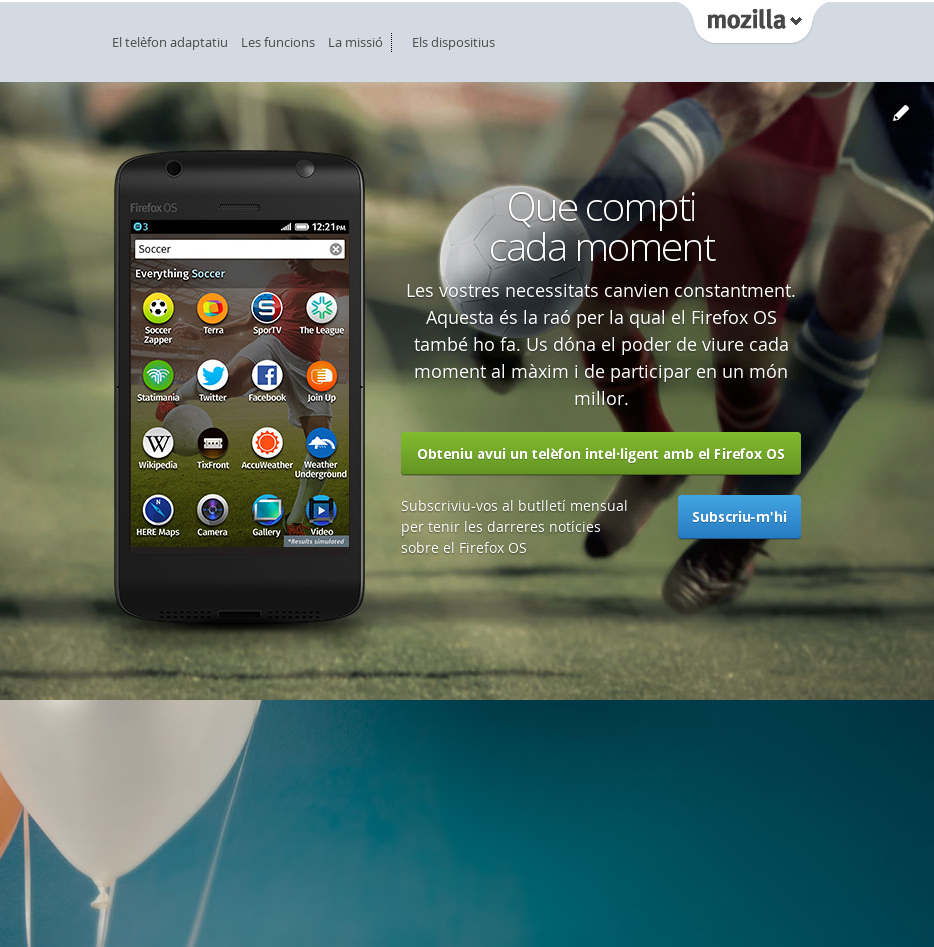
00. FirefoxOs

firefoxos

01. Alquimia WRG

Example of parallax scrolling websites
Alquimia WRG uses parallax elements to simulate a 3D space environment

02. The Royal British Legion

Example of parallax scrolling websites
The Poppy Appeal site uses illustrations and animations to educate both a young and old audience

03. Nintendo Game Boy

Example of parallax scrolling websites
Play along with parallax scrolling on this Game Boy site

04. Flat design vs Realism

Which side are you on?

05. Sony

This offering from Sony is unlike any parallax scrolling we’ve ever come across to date


06. Costa Coffee

The Graphite Design team chose an illustrative approach for more flexibility

07. Highway One

The weight of the images was the biggest challenge for the dev team

08. Make Your Money Matter

Manage your finances with information and advice from Make Your Money Matter

09. The Beast

 The Beast
The folk singer’s site self-scrolls as a poem is read out

10. The Lab

 The Lab
This parallax scrolling site is different and instantly engaging

11. Why Your Brain Craves Infographics

 infographics
An infographic to end all infographics!

12. 5emegauche

 5emegauche
Each page has its own scrolling mechanism

13. Atlantis World’s Fair

 Atlantis World’s Fair
The Atlantis World’s Fair use parallax scrolling to tell their story

14. Every last drop

 Every Last Drop
Learn about the problems of water conversion through this brilliant parallax scrolling site

15. Seattle Space Needle

Scrambled egg all over my face. What is a boy to do?

16. Golden State of Mind

 Golden State of Mind
Golden State of Mind showcases the best of California

17. Living Word

 Living Word
UK-based design agency Tribe developed this parallax scrolling site for translation agency Living Word

18. Spotify

 Spotify
Spotify employs subtle use of parallax scrolling on its introductory page

19. Madwell

 Madwell
New York agency Madwell uses parallax scrolling to add a sense of depth

20. The Jacksonville Downtown Art Walk

 The Jacksonville Downtown Art Walk
The Jacksonville Downtown Art Walk site makes scrolling a joy

21. Von Dutch

 Von Dutch
Von Dutch’s site tells its story through scrolling

22. Fannabee

 Fannabee
Watch the icons as you scroll down the Fannabee page

23. Peugeot Hybrid4

 Peugeot
Peugeot uses parallax scrolling to create an auto-playing web comic

24. Cultural Solutions

The circles move at different speeds for a subtle 3D effect

25. jQuery Conference

 jQuery conference
Last year’s jQuery conference features some small, subtle parallax scrolling animations

26. Shape

Parallax scrolling adds shape to, er, Shape’s homepage

27. Nintendo

Nintendo uses parallax scrolling to take you through the history of Mario Kart

28. Activate Drinks

Activate Drinks uses parallax scrolling bubbles to add a third dimension

29. The Whitehouse’s Iraq Timeline

The White House uses parallax scrolling to heighten the emotion of its Iraq War timeline

30. Pitchfork Cover Stories

Pitchfork’s ‘Cover Stories’ series has won a host of awards for web design

31. Green Man

YCN Studio took care of the entire Green Man festival rebrand

32. Soleil Noir 2012 | We believe in…

This site was originally designed as a greetings card

33. Oakley

Oakley combines parallax scrolling and striking photography in its latest website for the Airbrake MX goggles

34. Jason Kenny OBE

Bristol-based design agency Fiasco created a vertical scrolling site for Olympic English track cyclist Jason Kenny

35. La Moulade

examples of parallax scrolling
La Moulade features an unusual navigation widget that floats at the top


36. Marmoset

examples of parallax scrolling
Spotify might want to start watching its back with this new music site

37. Walking Dead

 Walking Dead
Walking Dead uses parallax scrolling to pull you into its gory world

38. New York Times: Tomato Can Blues

 New York Times
A beautiful experience is to be had with this parallax scrolling New York Times article

39. Health Service Payouts

 health payouts
This online infographic highlights the problem of health compensation payout culture

40. We are Unfold

 We Are Unfold
Clever scrolling works well with a sticky top-right nav menu

41. Savings Challenge

 Savings Challenge
The site helps you discover how much you could save on your car

42. Cyclemon

 cyclemon
The site features just about every bike type there is

43. Lexus

 Lexus
Experience the new Lexus without visiting the showroom on this interactive site

44. Life in my Shoes

 Life In My Shoes
The About page features a lively parallax effect

45. Snow Fall

The New York Times’ ‘Snow Fall’ article kickstarted a whole new craze for rich parallax sites

46. The Reykjavik Confessions

Here’s the BBC News take on a Snowfall-style story


Facebook estudia les emocions dels seus clients

Filed under: Ciència i tecnologia — Joaquim Perez Noguer at 6:31 pm on Dijous, agost 21, 2014

[Vist a   www.technologyreview.es] La manipulació emocional és l’últim intent de Facebook d’usar als seus usuaris

L’estudi es va dur a terme sense el seu consentiment i va més enllà d’altres anàlisis prèvies com el del vot o la donació d’òrgans

Dijous, juliol 3, 2014
Per David Talbot

Correu electrònic Imprimir small textmedium textlarge text

El controvertit estudi de Facebook per explorar si és possible manipular els estats d’ànim de les persones mitjançant la deformació dels seus canals de notícies a favor de contingut negatiu o positiu s’ha produït una resposta emocional particularment negativa, però no és ni de bon tros el primer intent de la xarxa social per controlar el comportament de l’usuari.

La companyia té enormes quantitats de dades de més de mil milions d’usuaris, i compta amb una posició única per estudiar tots els seus moviments i realitzar experiments mesurant els canvis de comportament sota diferents condicions. Això ajuda a Facebook a persuadir els seus usuaris a passar més temps en el lloc. Però en els últims tres anys també ha estat investigant altres aspectes que van des votar fins al efecte d’animar la gent a fer donacions d’òrgans.

L’empresa compta amb un equip científic de dades dedicat a experiments, tant per avançar en els seus objectius de negoci com per dur a terme recerca de ciències socials, sovint amb col · laboradors en el món acadèmic. Altres acadèmics realitzen investigacions a Facebook sense col · laborar amb l’empresa, ja sigui mitjançant la simple observació dels usuaris o la creació d’aplicacions que els demanin participar en un projecte.

L’estudi, realitzat al gener de 2012 però publicat recentment, ha estat controvertit perquè ha provocat un efecte negatiu en alguns usuaris, però també perquè els usuaris afectats no se’ls va demanar permís per participar (acceptar els termes i condicions de Facebook es va prendre com a consentiment).

«El diferent d’aquest estudi és que els participants no van consentir expressament ser part d’una manipulació experimental per a l’estudi, i que els resultats van ser publicats», assenyala la científica informàtica a la Universitat Carnegie Mellon (EUA) Lorrie Cranor, on dirigeix ​​el Laboratori de Seguretat i Privacitat Utilitzable CyLab .

Facebook va publicar un experiment amb 689.003 usuaris per veure si podia manipular les seves emocions mitjançant la variació de la selecció dels missatges en els seus canals de notícies. Un grup veia històries filtrades amb paraules positives. Un altre grup experimental va veure històries filtrades amb paraules negatives. En el seu conjunt, les persones sotmeses a aquests canvis van tendir a escriure missatges que reflectien els estats d’ànim corresponents, encara que l’efecte va ser petit.

Però la suma d’efectes petits pot ser grance. Estudis de Facebook anteriors han demostrat que una reestructuració relativament petita de les seves pàgines i missatges pot tenir efectes socials importants. Potser el més espectacular sigui un estudi de 2012 que va mostrar que el dia de les eleccions el 2010, en el qual la xarxa social va publicar recortadorios per anar a votar, l’acció va provocar que hagués fins 340.000 votants més (veure » De com Facebook portar als votants fins a les urnes «).

A més, el 2012 Facebook va mostrar que podria tenir el poder de fer que la gent donés òrgans. La companyia va col · locar una caixa en les pàgines de línia de temps sobre la qual es podia fer clic, perquè la gent indiqués si eren donants registrats. La campanya es va associar amb un gran augment de la inscripció de donants. (No obstant això, en aquest cas l’àmplia cobertura mediàtica de la iniciativa va complicar el poder analitzar si realment va provocar l’augment directe d’inscripcions).

En certa manera, la investigació publicada per Facebook és només part d’un gran esforç continu de manipulació basat en internet. «El que resulta molt més preocupant és la manca de transparència sobre les pràctiques de Facebook en general», assenyala el professor assistent a la Universitat de Carolina del Nord a Chapel Hill (EUA), Zeynep Tufeki, i exmembre del Centre de Política d’Informàtica a la Universitat de Princeton (EUA). «Em preocupen aquestes pràctiques de proves i la manipulació de l’experiència de l’usuari que es dóna diàriament. Quines altres coses fa Facebook cada dia? No tenim ni idea».

La recollida i anàlisi de dades personals és un negoci de milers de milions de dòlars (veure » Les dades em van obligar a fer-ho «) dissenyat per promoure compres, captar l’atenció i donar forma a la conducta. «La publicitat i els mitjans de comunicació treballen constantment per manipular les nostres emocions, així que no sembla que aquest estudi sigui particularment problemàtic», afirma Cranor. «Som rates de laboratori sense ser conscients d’això».

[…]


Iteracions en Java 8

Filed under: Ciència i tecnologia — Joaquim Perez Noguer at 4:46 pm on Dimecres, agost 13, 2014

Una de les novetats del Java 8 és que ara permeten expressions Lambda. Amb les expressions Lambda s’afegeix una nova forma d’iterar amb Java.

Iteracions amb Enumeration des de Java 1:

Vector names =new Vector();
Enumeration e = names.elements();
while(e.hasMoreElements()) 
{
   String name =(String) e.nextElement();
   System.out.println(name);
}


Iteracions amb Iterator des de Java 1.2:

List names =new LinkedList();
Iterator i = names.iterator();
while(i.hasNext())
{
  String name =(String) i.next();
  System.out.println(name);
}

Iteracions amb generics des de Java 5:

 List<String> names =new LinkedList<String>(); for(String name : names) { System.out.println(name); } 

Iteracions amb forEach() i lambda expressions des de Java 8:

List<String> names =new LinkedList<>(); 
names.forEach(name ->System.out.println(name)); 

Pipelines amb stream() o parallelStream() des de Java 8: inclou filter(), distinct(), sorted(), map(), average(), sum(), max(), forEach()

List<String> names =new LinkedList<>();
long count = names.stream().filter(name -> name.startsWith("A")).count();


Els avantatges de treballar amb forEach() i pipelines són:

  • El control del bucle el té la funció forEach() per tant es pot crear una funció  forEach() pròpia que a cada iteració faci alguna cosa més que l’expressió lambda
  • Els pipelines permeten un codi més net i declaratiu
  • Els pipelines amb parallelStream() permeten una execució en paral·lel
  • També es podria fer una cosa molt semblant als lambda expressions  utilitzant inner classes i interfaces, però la diferència és que les expressions lambda no creen nous objectes java i per tant són molt més ràpides d’executar, ja que no han de crear i destruir objectes temporals.

Més informació a JavaWorld.com: Iterating over collecionts in Java 8

Z-Machines: els robots també fan rock’n’roll

Filed under: Ciència i tecnologia,Música — Joaquim Perez Noguer at 9:43 am on Dimecres, juliol 9, 2014

[youtube]http://www.youtube.com/watch?v=7MluikyEQF4[/youtube]

il·lusions òptiques

Filed under: Humor — Joaquim Perez Noguer at 10:15 am on Dimarts, juliol 8, 2014

Vist a Espai Internet:  22/06/2014: Un videoclip amb 28 il·lusions òptiques

Van fer seixanta-un intents de rodar el vídeo, i només van acabar amb èxit divuit. Al llarg del videoclip es canvien de vestit en nou ocasions. Els Ok Go diuen que aquest és el videoclip més difícil que han fet mai; aquest tipus de muntatges el van començar a fer vuit anys enrere, i han guanyat un Premi Grammy.

La cançó és el primer «single» que donen a conèixer del seu últim àlbum, titulat «Hungry Ghosts».

En aquest enllaç podeu veure tots els videoclips oficials d’OK Go al seu canal a Youtube. I aquí hi ha dos vídeos on ens expliquen el «making of». Tant en aquest primer com en aquest segon ens diuen com han aconseguit plasmar aquestes il•lusions òptiques en un sol plano seqüència.

A l’Espai Internet ja hem parlat dels videoclips d’Ok Go. I també hem tractat vàries vegades de les il•lusions òptiques. Podeu veure’ls als enllaços afegits.


[youtube]http://www.youtube.com/watch?v=m86ae_e_ptU&list=PL0FB9262CF878A34A[/youtube]

La Vella dels capsdellúpia de Vic fa 150 anys

Filed under: Activitats culturals — Joaquim Perez Noguer at 3:50 pm on Dilluns, juliol 7, 2014

[Vist a Osona.com] Una emotiva festa del 150è aniversari de la Vella ha donat aquest divendres, 27 de juny, el tret de sortida de la festa major de Vic 2014 , que s’allargarà fins al 13 de juliol i que presenta una setantena de propostes. La ciutat ha homenatjat així a l’històric cap de llúpia, amb la realització d’una escultura a la Plaça Gaudí. La inauguració de l’obra s’ha fet a dos quarts de set de la tarda, en un acte en el que hi havia el regidor de Ciutadania i Cultura, Joan López; l’escultor i autor, Manel Casserras; i l’actual portador de la Vella, Manel Dot. Tots ells han fet uns breus parlaments.

Manel Dot, actual portador de la Vella, en la festa del 150è aniversari del cap de llúpia. Foto: Adrià Costa

Google I/O 2014

Filed under: Ciència i tecnologia — Joaquim Perez Noguer at 3:21 pm on Dijous, juliol 3, 2014

En faig ressò del blog de Christian Heilmann (Mozilla) sobre la conferència anual de Google, la Google I/O 2014:

I’ve always been a fan of Google IO. It is a huge event, full of great announcements. Google goes all in organising a great show and it is tricky to get tickets. You always walked home with the newest gadgets and were the first to learn about new products coming out. The first years I got invites as an expert. This year I got a VIP ticket which meant I paid for it but didn’t have to wait or be part of a lottery or find an easter egg or whatever else people had to do. I was off to the races and excited to go.


IO, a kick-ass mobile and web show

I liked the two day keynote format of the last years: on the first day you learned all about Android and new phones and tablets and on the second it was all about Chrome and Google Web Services like Google+. This wasn’t the case this year; the second day keynote didn’t happen. Sadly enough the content format seems to have stayed the same.

I liked Google IO as it meant lots of great announcements for the web. As someone working for a browser maker I had a sense of dread each year to see what amazing things Chrome would get and what web based product would draw more people to using Chrome as their main browser. Google did well getting the hearts and minds of the web (and web developer) community.

This is good: competition keeps us strong and the Chrome team has always been fair announcing standards support in their browser as a shared effort between browser makers instead of pretending to have invented it all. The Chrome Summit last year was a great example how that can work. This hasn’t changed. I have quite a few friends in the Chrome team and can rely on them moving the web forward for all instead of building bespoke APIs.


Google, a web company

Google is a company that grew on the web. Google is a company that innovated with simplicity where others overwhelmed their users. We used their search engine because it was a simple search box, not a search box in a huge web site full of news, weather, chat systems, sports news and all kind of other media provided by partners. We used GMail because it made us independent of the computer we read our mails on and it had amazingly simple keyboard shortcuts. Google understood the web and its needs – where others only allowed you to make money by plastering huge banners all over your blog, Google was OK with simple text links.

With this in mind I was super happy to go and get my fix of Google IO for this year.

Where is the web?

Suffice to say, in this respect I was disappointed by this year’s Google IO. Not the whole event, but the keynote. My main worry is that there was hardly any mention of the web. It was all about the redesign of Android. It was about wearables Google doesn’t create or have much of a say in. It was about “introducing” Android TV (which has been done before and then scrapped it seems). It was about Android Auto. It was about Android’s new design and the ideas behind it. Mentions of Chrome were scarce and misguided.

What do I mean by that? I was sure that Google will announce HTML5 Chrome Apps to run on Android and be available in the Play store. This would’ve been a huge win for the web and HTML5 developers. Instead we got an announcement that Android Apps will now run on Chromebooks. There was no detailed technical explanation how that would happen but I learned later that this means the Android Apps run in Native Client. This is as backwards as it can get from a web perspective. Chromebooks were meant to make the web the platform to work on and HTML5 as the technology. Heck, Firefox on Android creates dynamic APKs from Open Web Apps. I’d have expected Google to pull the same trick.

There was no annoucement about Chromebooks either (other than them being the best-seller on Amazon for laptops) and when you followed Google+ in the last months, there were some massive advancements in their APIs and standards support.

The other mention was that the new look and feel of Android will also be implemented for the web using Polymer.

Android’s new face looks beautiful and I love the concept of drop shadows and lighting effects being handled by the OS for you. It felt like Google finally made a stand about their design guidelines. It also felt very much like Google tries to beat Apple in their own game. The copious use of “delightful experiences” in every mention of the new “material design” refresh became tiring really fast.

Chrome and the web didn’t get any love in the IO keynote. The promise that the new design is implemented “running at 60FPS” using Polymer in Chrome was an aside and can’t have been a simple feat. It also must have meant a lot of great work of the Android team together with the Polymer and the Chrome team. Lots of good stories and learning could have been shown and explained. Other work by the Chrome and Polymer team that must have been a lot of effort like the search result page integration of app links or the Chromebook demos were just side notes; easy to miss. Most of the focus was on what messages you could get on your watch or that there might be an amazing feature like in-car navigation coming soon later this year if you can afford a brand new car.

Chromecast was mentioned to get a few updates including working without sharing a wireless network. This could be huge, but again this was mostly about sending streaming content from Google Play to a TV, not about the web.

Google+ apparently doesn’t exist and the fact that Hangouts now don’t need any plugin any longer and instead use WebRTC wasn’t noteworthy. Google Glass was also suspiciously missing from the keynote.

Props to the Chrome Devrel team

I got my web fix from the Google Devrel team and their talks. That is, when I arrived early enough and didn’t get stuck in a queue outside the room as the speaker beforehand went 10 minutes over.


I got lots of respect for the team and a few of the talks are really worth watching:

Others I have yet to see but look very promising:

Another very good idea was the catered Chrome lunch allowing invited folk to chat with Chrome engineers and developers. These could become a thing they can run in offices, too.

Other things that made me happy

It wasn’t all doom and gloom though. I enjoyed quite a few things about Google IO this year:

  • It was great to see all the attendees from different GDG chapters. Very excited developers from all over the globe, waving their respective flags and taking pictures of one another in front of the stage was fun to see. Communities rock and people who give their free time to educate others on technologies of certain companies deserve a lot of respect and mentioning. It is a refreshing thing to see this connected with a large Silicon Valley company and is a very enjoyable contrast to the entitlement, arrogance and mansplaining you got at the parties around IO.
  • Android One – a very affordable Android phone aimed at emerging markets like India and Africa. It seems Google did a great job partnering with the right people and companies to create a roll-out that means a lot. FirefoxOS does exactly the same and all I personally want is people to be able to access the web from wherever. In many countries this means they need a mobile device that is affordable and stays up-to-date. Getting your first mobile is a massive investment. I am looking forward to seeing more about this and hope that the Android One will have a great web experience and not lock you into Play Store services.
  • The partner booths were interesting. Lots of good info on what working with Android TV was like. I loved the mention of the app students created for their blind friend to find classes.
  • The internet of things section was very exciting – especially a prototype of a $6 beacon that is a URL and not just an identifier. This was hidden behind the cars, in case you wondered what I am talking about.
  • Lots of mentions of diversity issues and that Google is working hard to solve them was encouraging to see.
  • Google Cardboard was a superb little project. Funny and a nice poke towards Occulus Rift. Well done marketing, that one.
  • Project Tango is pretty nuts. I am looking forward to see more about this.
  • Accessibility had an own booth on the main floor and it seems that people like Alice Boxhall get good support in their efforts to make Web Components available to all
  • The food and catering was good but must have cost Google and arm and a leg. I saw some of the bills that Moscone catering charges and it makes me dizzy.
  • The party was not inside the building with a band nobody really appreciated (the pilot of Silicon Valley comes to mind and the memory of the Janes Addiction “performance”) but outside in Yerba Buena gardens. It had a lovely vibe and felt less stilted than the parties at the other IOs.

IO left me worried about Google

Overall, as a web enthusiast I am not convinced the experience was worth getting a flight, hotel in the valley (or SF) and the $900 for the ticket.

The crowd logistics at Google IO were abysmal. Queues twice around the building before the keynote meant a lot of people missed it. Getting into sessions and workshops was very hard and in many cases it made more sense to watch it on your laptop – if you were outside as the wireless of the conference wasn’t up to the task either. One amazingly cool feature was that the name tags of the event were NFC enabled. All you had to do was touch your phone to it and the people you met were added to your Google+ as “people I met”. The quite startling thing was that I had to explain that to a lot of people. If you do something this useful promoting one of your products and making it very worth while for your audience, wouldn’t it make sense to mention that in the beginning?

The great thing is that with YouTube, IO has the means to bring out all the talks for me to watch later. I am very grateful for that and do take advantage of it. All the Google IO 2014 videos are now available and you can see what you missed.

I always saw Google as one of the companies that get it and drive the web forward. The Chrome team sure does it. The Web Starter Kit (kind of Google’s Bootstrap) shows this and so does all the other outreach work.

This keynote, however, made Google appear like a hardware or service vendor who likes to get developers excited about their products. This wasn’t about technology, it was about features of products and hardware ideas and plans. At times I felt like I was at a Samsung or HTC conference. The cloud part of the keynote claimed to be superior to all competitors without proving this with numbers. It also told the audience that all the technical info heralded at previous Google IOs was wrong. As someone who speaks a lot on stage and coaches people on presenting I was at times shocked by the transparency of the intention of the script of some of the parts of the keynote. Do sentences like “I use this all the time to chat with my friends” when announcing a new product that isn’t out yet work? The pace was all wrong. Most of the meat of the announcements for developers were delivered in a rather packed 8 minutes by Ellie Powers at 2:16:00 to 2:24:00.

To me, this was an IOU by Google to the Web and Developer community. Give us a better message to see that you are still the “don’t be evil” company that makes the web more reachable and understandable, faster and more secure. Times may change, but Google became what it is by not playing by the rules. Google isn’t Apple and shouldn’t try to be. Google is also not Facebook. It is Google. Can we feel lucky?
Microsoft enfonsa la xarxa de IP dinàmiques no-ip

Filed under: Ciència i tecnologia,Injustícies de la vida — Joaquim Perez Noguer at 12:48 pm on Dimarts, juliol 1, 2014

Avui 1 de juliol del 2014, s’ha aturat el servei a 22 dominis dinàmics del No-ip.com.

El servei de dominis dinàmics a no-ip és molt senzill, l’usuari pot escollir un domini dels molts que té no-ip:  zapto.org, redirectme.net, …  un cop fet això l’usuari pot reservar-se diversos subdominis per controlar els seus servidors sense necessitar que tinguin una ip fixa. Per exemple    srv1.zapto.org  al primer servidor   srv2.zapto.org el segon, etc…

Doncs bé avui molts dels usuaris de no-ip s’han vist afectats pel tall del servei. El motiu és que Microsoft ha presentat una demanda contra alguns dels dominis de no-ip. Pel que sembla Microsoft havia tingut atacs informàtics des d’alguns dels subdominis de no-ip i en comptes de tallar només aquests subdominis ha demanat tallar tot el domini sencer, afectant a moltíssims clients innocents de no-ip.

Microsoft no ha avisat en antelació a no-ip. I quan no-ip li ha demanat que com a mínim deixi una mica de temps  Microsoft s’hi ha negat. Pel que sembla Microsoft no té la capacitat de posar-se un filtre per evitar només els subdominis que li molestin i ha hagut de tallar tots els dominis sencers.

Més informació: no-ip formal statement.

d3js: gràfics en javascript

Filed under: Ciència i tecnologia — Joaquim Perez Noguer at 2:24 pm on Dijous, juny 26, 2014

Voleu aprendre a fer gràfics i diagrames impressionants en javascript?  Proveu les biblioteques d3js.org i mireu la presentació  http://hsilomedus.me/wp-content/uploads/javadayd3/index.html

Alguns exemples:

« Previous Page — Next Page »